Metal Machining Co.

Official blog of Metal Machining Co. in Puerto Rico directed towards informing about emerging new technologies in engineering and automation. Metal Machining is a company dedicated to improving our clients manufacturing processes, and with our Metalco division, giving full automation services for all industries, from Pharmaceutical to Architectural.

Tuesday, October 07, 2008

Metal Machining Co.


Metal Machining is a company that can best be described as a team motivated towards improving the manufacturing processes of our clients. That is why our philosophy has always been that we shall bring to the table the best and most efficient services, providing the latest technologies to meet and surpass our client's needs, while still upholding the maximum level of reliance in our products.

Metalco, a relatively new division of Metal Machining, was designed to direct our clients in need of complex automation services to our team of seasoned veterans in the latest computerization technologies. They are prepared to design and create from the ground up machinery geared towards any industry. Communication is key, and we keep our clients updated and linked to the development process to cater to their every need while maintaining everything cost-effective and of the utmost quality.

We will always strive to please our customers every step of the way so we can build an excellent and long lasting relationship.

As a new method of keeping our current and future clients in touch with new emerging technologies, this blog will be updated daily with news on the engineering and automation front. Our sister site, www.metalcogroup.com will introduce the extent of our manufacturing and automation services, so do not hesitate to visit. It is currently under construction and will be finished during the next couple of weeks.

Monday, October 06, 2008

Examples of our work.


This are just some examples of some of our works in progress in the automation department.


Almost finished.

Sunday, October 05, 2008

What is automation?

Before we begin posting new developments on automation and engineering technologies, I thought we could begin by explaining what exactly is automation.

Automation (ancient Greek: = self dictated), roboticization[1] or industrial automation or numerical control is the use of control systems such as computers to control industrial machinery and processes, replacing human operators. In the scope of industrialization, it is a step beyond mechanization. Whereas mechanization provided human operators with machinery to assist them with the physical requirements of work, automation greatly reduces the need for human sensory and mental requirements as well.

The most visible part of modern automation can be said to be industrial robotics. Some advantages are repeatability, tighter quality control, higher efficiency, integration with business systems, increased [[Productivity (economics)|productivity and reduction of labor.

Specialised hardened computers, referred to as programmable logic controllers (PLCs), are frequently used to synchronize the flow of inputs from (physical) sensors and events with the flow of outputs to actuators and events. This leads to precisely controlled actions that permit a tight control of almost any industrial process. (It was these devices that were feared to be vulnerable to the "Y2K bug", with such potentially dire consequences, since they are now so ubiquitous throughout the industrial world.)

Human-machine interfaces (HMI) or computer human interfaces (CHI), formerly known as man-machine interfaces, are usually employed to communicate with PLCs and other computers, such as entering and monitoring temperatures or pressures for further automated control or emergency response. Service personnel who monitor and control these interfaces are often referred to as stationary engineers.

Another form of automation involving computers is test automation, where computer-controlled automated test equipment is programmed to simulate human testers in manually testing an application. This is often accomplished by using test automation tools to generate special scripts (written as computer programs) that direct the automated test equipment in exactly what to do in order to accomplish the tests.

Different types of automation tools exists:
* Simulation
* DCS - Distributed Control System
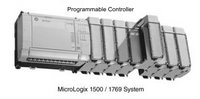
* PLC - Programmable Logic Controller
* PAC - Programmable automation controller
* ANN - Artificial neural network
* HMI - Human Machine Interface
* SCADA - Supervisory Control and Data Acquisition
* BMS - Batch Management System
* MES - Manufacturing Execution System
* LIMS - Laboratory Information Management Systems


A list of automation tools used in the IT field (past and present):

* AutoTester
* WinRunner
* QA Load
* QA Run by Compuware
* TestPartner by Compuware
* SilkTest
* TestPro
* Rational Robot
* Rational Functional Tester by IBM
* Rational Performance Tester by IBM
* Macro Scheduler by MJTNet
* AutoIntern by Graphical Dynamics
* Opalis Integration Server Opalis

That't it for the quick overview on automation. Keep checking our blog for our daily updates.

Saturday, October 04, 2008

Portable Alloy Analysis

X-ray fluorescence (XRF) is the phenomenon where a material is exposed to X-rays of high energy, and as the X-ray (or photon) strikes an atom (or a molecule) in the sample, energy is absorbed by the atom. If the energy is high enough, a core electron is ejected out of its atomic orbital.

An electron from an outer shell then drops into the unoccupied orbital, to fill the hole left behind. This transition gives off an X-ray of fixed, characteristic energy that can be detected by a fluorescence detector. The energy needed to eject a core electron is characteristic of each element, and so is the energy emitted by the transition. The transition of an L shell electron dropping into the K shell is termed a Kα transition, while an M shell electron dropping into the K shell is a Kβ transition.


When the energy source is a synchrotron, or the X-ray are focussed by a optic, like a polycapillary, the X-ray beam can be very small and very intense, and atomic information on the sub-micrometer scale can be obtained.

From this technology portable alloy analyzers have been devised. Innov-X handheld alloy analyzers use x-ray fluorescence technology to allow inspectors to confirm the alloy composition of a wide range of metals, simply by pointing the detector gun at the metallic surface.

Within seconds the gun displays a detailed readout of the composition of the alloy. Excellent for analysis of metal alloys for PMI, scrap metal recycling and QA/QC, as well as analysis of soils and sediments, environmental monitoring, lead in paint assessment, geochemical mapping, and more.

We recently acquired this technology and have started both, providing verification and validation of alloys, and bringing Innov-X line of handheld alloy analysers to those who need for purchase. Remember to send us an e-mail or call us for more information.

Friday, October 03, 2008

Metalco Specialties is born.

A new division for Metalco under Metal Machining Co. Inc. has been created specifically for the sale of new mass production items we are developing. We have also the capability of customizing these items to the customer's needs.
Among the new items we have pharmaceutical grade waste and storage solutions of any size and shape. Below we have a few examples of the offerings. Remember to contact us if you have any questions of need a quotation for any of the items shown.